

Understanding the Scope: Prevalence and Demographics
Incontinence is not a rare condition; it is a widespread public health concern whose prevalence varies meaningfully by age, sex, and underlying health factors.
Urinary Incontinence (UI)
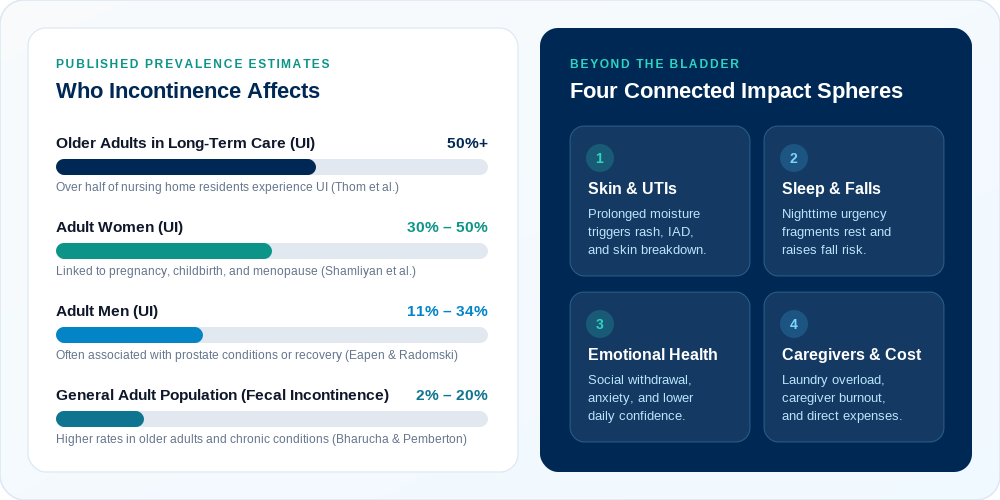
- Women: UI is considerably more common in women than men, largely due to pregnancy, childbirth, and menopause. Studies suggest up to 30–50% of adult women experience some form of UI (Shamliyan et al., 2008), with prevalence often rising with age.
- Men: While less common, UI in men is frequently associated with prostate conditions, prostate surgery, or neurological factors. Estimates suggest 11–34% of men experience UI (Eapen & Radomski, 2016).
- Children: Childhood UI, particularly nocturnal enuresis (bedwetting), affects roughly 5–10% of 7-year-olds, with most cases resolving spontaneously (Vandersteen et al., 2019).
- Older Adults: Age is a major risk factor, with over 50% of nursing home residents experiencing UI (Thom et al., 1999).
Fecal Incontinence (FI)
- General Adult Population: Prevalence estimates range from 2% to 20%, with higher rates among older adults and people with underlying medical conditions (Bharucha & Pemberton, 2007).
- Children: FI can also affect children, often linked to chronic constipation.
Beyond the Bladder: The Physical and Mental Health Toll
The impact of incontinence extends well beyond leakage itself, influencing both physical comfort and emotional health.
Physical Health Consequences
- Skin Irritation and Infections: Repeated exposure to urine or feces can cause moisture-associated skin breakdown, rashes, pressure injuries, and recurrent urinary tract infections (UTIs) (Nazarko, 2011).
- Sleep Disturbances: Frequent nighttime awakenings (nocturia) disrupt deep sleep, leading to daytime fatigue, irritability, and reduced cognitive sharpness (Breyer et al., 2017).
- Falls: Hurrying to the bathroom at night increases the risk of falls and serious fractures in older adults (Huang et al., 2018).
- Activity Restriction: Fear of leakage can lead people to cut back on exercise, walking, and travel, worsening cardiovascular and metabolic health over time.
Mental and Emotional Health Consequences
- Embarrassment and Stigma: Societal stigma frequently causes individuals to delay seeking help or keep symptoms hidden even from close family.
- Anxiety and Depression: Constant vigilance around rest stops and accidents elevates chronic anxiety and depressive symptoms (Coyne et al., 2004).
- Loss of Confidence & Social Withdrawal: Skipping social gatherings, religious services, or family trips to avoid potential embarrassment gradually deepens social isolation.
The Ripple Effect: Social and Economic Burdens
- Relationship Strain: Unaddressed leakage can place stress on intimacy and open communication within couples.
- Caregiver Burden: Family members supporting aging parents often carry heavy physical, emotional, and laundry workloads that contribute to caregiver fatigue and burnout (Schulz & Martire, 2004).
- Direct & Indirect Costs: Ongoing expenses for absorbent products, clinical visits, medications, lost work productivity, and preventable complications (such as UTIs, skin breakdown, or falls) place real financial pressure on households and healthcare systems alike.
Breaking the Silence: Seeking Help and Management
Despite its wide impact, incontinence remains underreported and undertreated because many people assume it is simply an inevitable part of aging. In reality, practical steps and medical options can meaningfully improve daily quality of life.
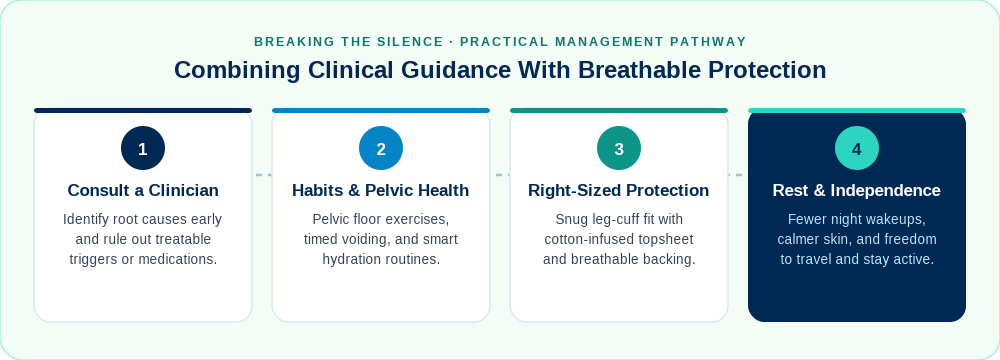
- Consult a Healthcare Professional: Start by speaking openly with a physician to evaluate root causes, medications, and targeted treatment options.
- Lifestyle Modifications: Adjust fluid timing, weight management, and common bladder irritants such as excess caffeine.
- Pelvic Floor Muscle Training (Kegels): Guided strengthening of the pelvic floor can substantially improve stress and mixed incontinence.
- Medications & Behavioral Therapies: Bladder retraining, timed voiding, and targeted prescriptions may help calm overactive bladder symptoms.
- Medical Devices & Procedures: Options such as pessaries, nerve stimulation, or minimally invasive procedures may be discussed for persistent cases.
- Breathable, Right-Sized Absorbent Products: Choosing snug-fitting breathable briefs or pull-ups with an organic cotton-infused topsheet and zero-rewet core prevents sleep disruption and protects sensitive skin.
- Community & Caregiver Support: Open conversations and support groups reduce isolation for both wearers and family caregivers.
Conclusion
By recognizing incontinence as a multi-dimensional health and quality-of-life issue—not a personal failing—individuals and families can replace stigma with practical care, better skin protection, and restful nights. You are not alone, and effective support is available.
References
- Bharucha, A. E., & Pemberton, J. H. (2007). Fecal incontinence. Gastroenterology, 132(6), 2050–2065.
- Breyer, B. N., Shindel, A. W., & Husain, A. (2017). The association of nocturia with sleep disturbance and daytime somnolence in men. BJU International, 119(3), 481–487.
- Coyne, K. S., Zhou, Z., Bhattacharyya, S. K., & Brubaker, L. (2004). The burden of overactive bladder on health-related quality of life and work productivity in five European countries. BJU International, 93(7), 1022–1029.
- Eapen, R. S., & Radomski, S. B. (2016). Etiology and pathophysiology of male urinary incontinence. Translational Andrology and Urology, 5(1), 2–12.
- Huang, A. J., Subak, L. L., & Thom, D. H. (2018). Urinary incontinence and falls in older women. Journal of the American Geriatrics Society, 66(6), 1146–1153.
- Nazarko, L. (2011). Protecting skin from incontinence-associated dermatitis. British Journal of Community Nursing, 16(3), 112–117.
- Schulz, R., & Martire, L. M. (2004). Family caregiving of persons with dementia: prevalence, health effects, and support strategies. The American Journal of Geriatric Psychiatry, 12(3), 240–249.
- Shamliyan, T. A., Kane, R. L., & Wyman, J. F. (2008). Systematic review: randomized, controlled trials of nonsurgical treatments for urinary incontinence in women. Annals of Internal Medicine, 148(6), 459–473.
- Thom, D. H., Hanley, J., & Wood, R. (1999). Prevalence and correlates of incontinence in a community sample of women 60 years of age and older. Journal of the American Geriatrics Society, 47(6), 675–682.
- Vandersteen, D. R., Routh, J. C., & Wiener, J. S. (2019). The current epidemiology and natural history of enuresis. Current Urology Reports, 20(4), 16.
Looking for breathable overnight comfort?
Explore VIVO briefs and pull-ups with an organic cotton-infused topsheet—available in 11ct, 22ct, and 44ct sealed packs on Amazon.
Educational resource published by Hygient Corporation. This article is general informational content and not medical advice; consult a licensed clinician for diagnosis or treatment of incontinence or dermatologic conditions.